


The Quiet Stayer Problem: Why Engagement Is Falling Even When Nobody Quits
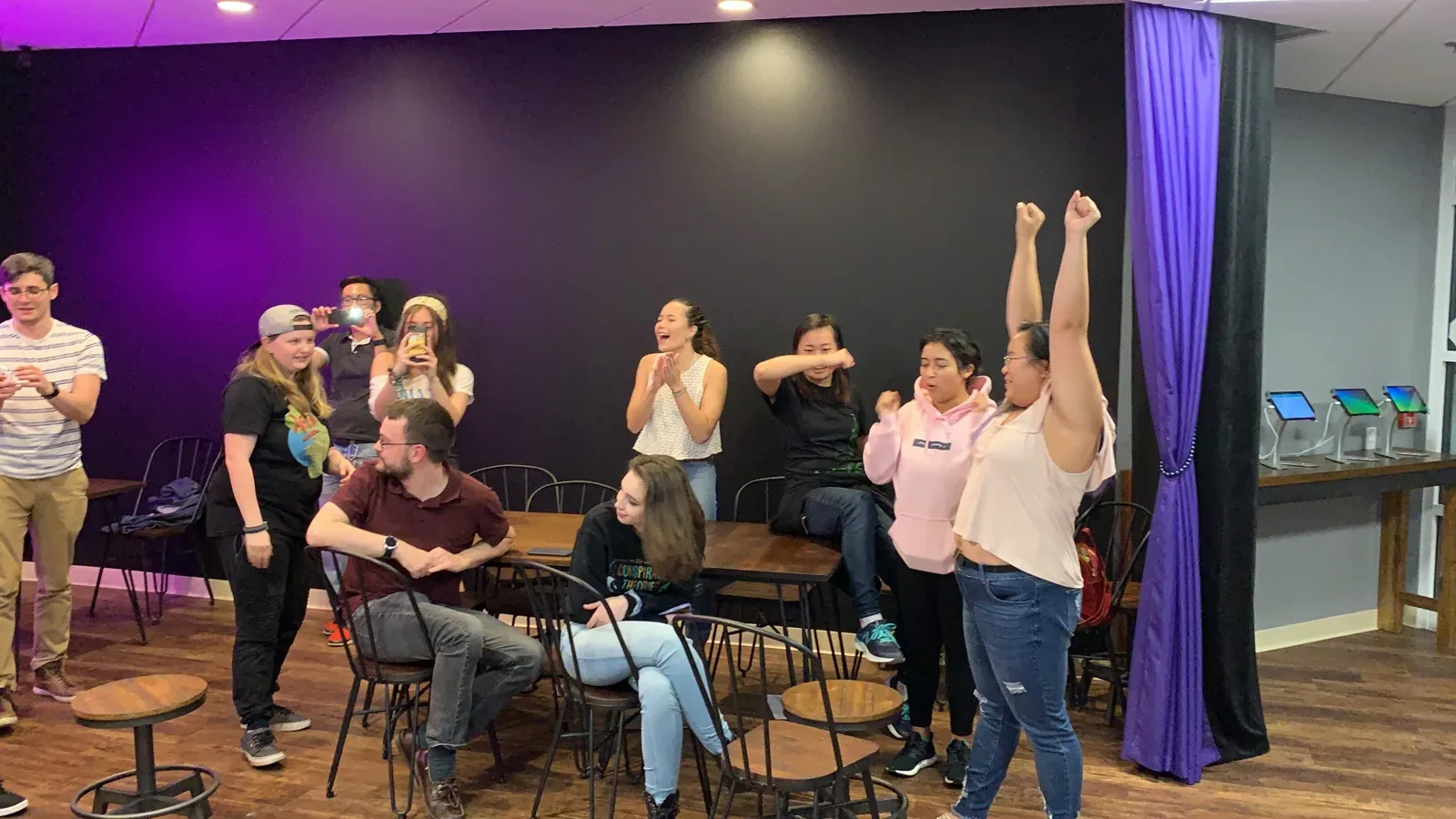
Quick answer: Engagement can fall while turnover stays low, because an employee who stays can still be checked out. Gallup put global engagement at 20% in 2025, its lowest since 2020. A retention number can't see these "quiet stayers", and a company-wide survey average can miss them too. Watching how people behave in a shared, unscripted challenge gives managers one more signal, alongside the survey rather than instead of it.
Every HR leader knows the relief of a low turnover number. Attrition is down, the dashboard is green, and the quarterly people review goes smoothly. So why does the team feel flat?
Because turnover counts the people who left. It can't count the ones who stayed and stopped trying.
Why is employee engagement falling even when turnover is low?
Gallup's State of the Global Workplace 2026 report found that global employee engagement fell to 20% in 2025, the lowest level since 2020, costing the world economy an estimated $10 trillion in lost productivity. Gallup describes the employees who aren't engaged as quietly quitting: still on the payroll, but psychologically unattached to the work and the company.
Source: Gallup, State of the Global Workplace 2026 (gallup.com).
That is the part that should worry people ops most. A workforce can look retained on paper and be disengaged in practice. We call this person the quiet stayer, our own label rather than Gallup's: not a flight risk, not disruptive, just emotionally somewhere else while still swiping a badge. A retention metric will never flag them.
Why doesn't my engagement survey catch the quiet stayer?
Two structural reasons. First, company-wide averages hide team-level problems: a company can show healthy overall engagement while specific teams are already burned out. Second, surveys measure what people say rather than what they do, and someone who has mentally checked out has little reason to answer anything but neutrally and move on.
There's a manager dimension too. Gallup found that manager engagement fell from 31% in 2022 to 22% in 2025 and accounts for most of the recent decline. The people who are supposed to notice a disengaging report are themselves stretched thin.
Source: Gallup, State of the Global Workplace 2026 (gallup.com).
What actually surfaces a disengaged employee?
Behavior under real conditions. The research on team building points the same way. A meta-analysis of team-building studies (60 correlations) found a positive, moderate effect overall, strongest on affective outcomes (how people feel about the team) and process outcomes (how the team works together), and it singled out goal setting and role clarification as the components that did the most good. That is the territory a survey average smooths over.
Source: Klein, C. et al., "Does Team Building Work?", Small Group Research, 40(2), 2009 (doi.org/10.1177/1046496408328821). The study covers team building in general, not escape rooms.
A 60-minute escape room is built around exactly those two things. There is a real clock, the clues are spread around the room, and nobody finds every clue alone: people have to say what they are holding and listen to what everyone else found. Someone who hangs back, lets others carry the puzzle and never claims a role can become visible within the hour, to the team as well as to you. The same setting works the other way: a shared challenge with an uncertain outcome can rebuild some of the connection that remote work and quiet withdrawal wore away.
One caution. An hour in a game is a prompt for a conversation, not a diagnosis. A quiet person is not necessarily a disengaged one, and how someone plays a puzzle says little about how they work. Use what you notice to ask better questions afterwards, never to label anyone.
What this looks like at Bond's
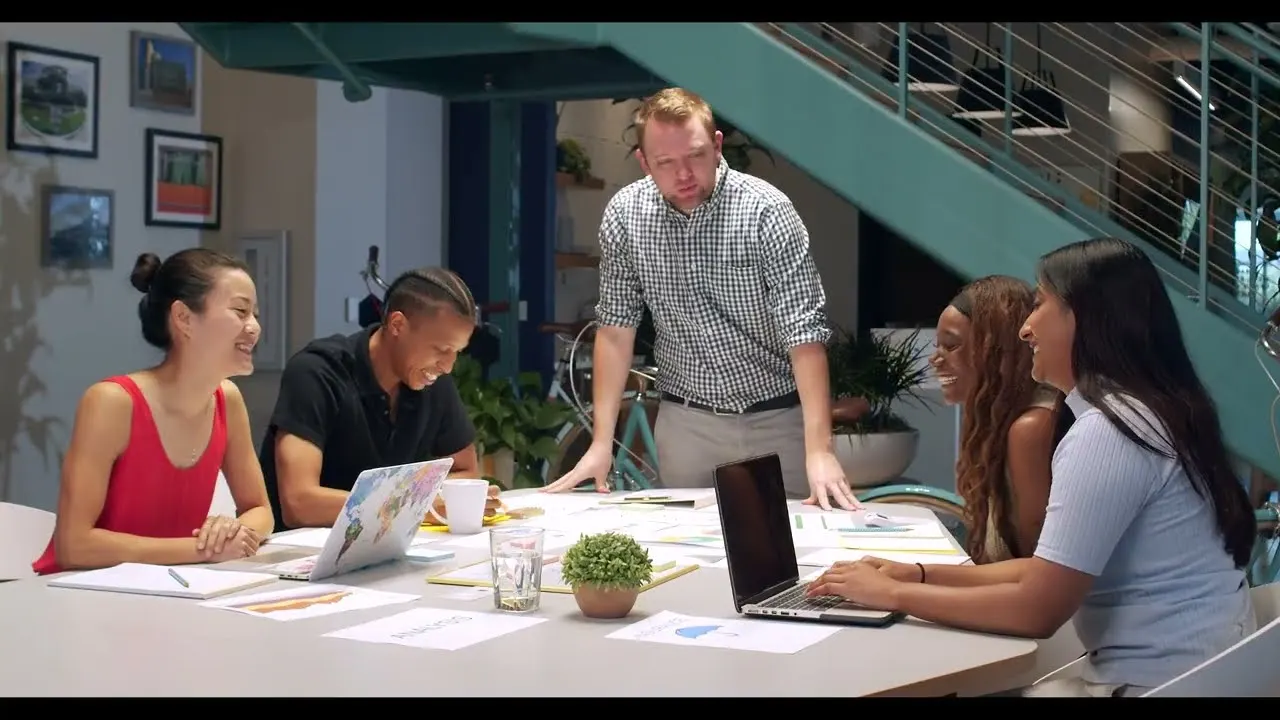
Bond's has hosted more than 9,000 team events over 11 years, in 15 escape rooms across Fairfax and Arlington. Every game is private, runs 60 minutes and costs $34 a person, so your team plays alone, with a game master watching and sending hints when asked. Team events run for groups of 6 to 150, from $325 a team.
In our experience, the person who steps up to run the room is rarely who the org chart would predict, and that is what managers tend to notice. To give everyone a job, match the room to the headcount. Save the White House III in Fairfax, for example, takes 3 to 10 players and is rated intermediate, so a team of eight or ten has enough going on for every person to own a piece of the puzzle.
Bond's runs the games; it does not assess your people or hand back a report. What you see is yours to use, alongside your survey and your own judgment. For a different angle on the same question, read why employee engagement survey alternatives start with behavior, how escape rooms can show who leads, and the research behind why immersive experiences build better teams. If the worry is burnout, read about team building for burnout recovery, and if it is how your team works with AI, team building in the age of AI. To see how simple the booking is, start with our guide to easy corporate team building.
Plan a session for your team
- Bond's Fairfax, 3949 University Dr, Fairfax, VA 22030. Nine escape rooms, free-roam VR, the Game Show and an on-site VIP conference space. (703) 270-0377.
- Bond's Arlington, 2800 Clarendon Blvd, Suite 910, Arlington, VA 22201. Six escape rooms, five minutes' walk from Clarendon Metro. (703) 884-1524.
Tell the events team what you want to understand about the team, and they will plan the day around it. Start with the team building event page: send the quote form with your headcount and date, or email info@bondsescaperoom.com. Packages start from $325 a team, and asking costs nothing.
Questions people ask
What is a quiet stayer at work?
A quiet stayer is an employee who has no plans to leave but has emotionally checked out: they meet the minimum, stop volunteering ideas and withdraw from the team. Low turnover hides them, which is why they rarely show up in HR dashboards until performance slips.
Can a team building event really fix disengagement?
A single event won't reverse structural disengagement, and Bond's doesn't claim it will. A well-designed shared challenge can rebuild some connection between teammates and give managers a clearer picture of how the team works together, which is a better starting point for a real conversation than a survey average.
Why are my engagement scores fine but my team feels off?
Company-wide averages hide team-level problems. A company can report healthy engagement overall while specific teams are already disengaged. Watching a team work together on something unfamiliar shows you what an averaged-out score conceals.
How much does a team building event at Bond's cost?
Escape rooms are $34 a person for a private 60-minute game, and the VR Arena and Game Show are $37 a person. Team events for 6 to 150 people are quoted from $325 a team, depending on headcount, how many games each person plays and whether you add catering or the conference room.
Can Bond's tell me which of my employees are disengaged?
No. Bond's runs private games for your group and doesn't assess individuals or report on them. Managers who join the event can notice how the team works together, but one hour of play is a conversation starter, not an evaluation of any person.
More stories
 Team Building
Why Your Engagement Survey Is Lying to You (and What to Watch Instead)
Surveys are delayed, self-reported and averaged. What managers can watch for in a shared challenge, and how to use it without labelling anyone.
 Team Building
 in the Age of AI: The One Skill Software Can't Automate
As AI takes on solo tasks, working things out with other people matters more. How escape rooms and free-roam VR give teams practice at it.
 Team Building
The Science of Why Immersive Experiences Build Better Teams Than Traditional Activities
What behavioral research says about why immersive experiences build better teams — and how to apply it at Bond's in Fairfax & Arlington, VA.